 ASI Global
Micro Hotels · Autonomous Operations
From Osaka, 1979 —
to the next generation of micro-hospitality
Operations on autopilot. Humans on exceptions.
ルーティンはASIへ。
A real private room for two, designed for today's cities.
Respecting the birthplace of capsule hospitality while reimagining private urban stays for modern travelers.
 🇯🇵
🇯🇵Heritage
Osaka, 1979.
Capsule hospitality emerged in Osaka in 1979. ASI respects that history while moving the format toward real privacy, two-person rooms, modern comfort and autonomous operations.
The problem
Cities need more capacity. Building more is not always the answer.
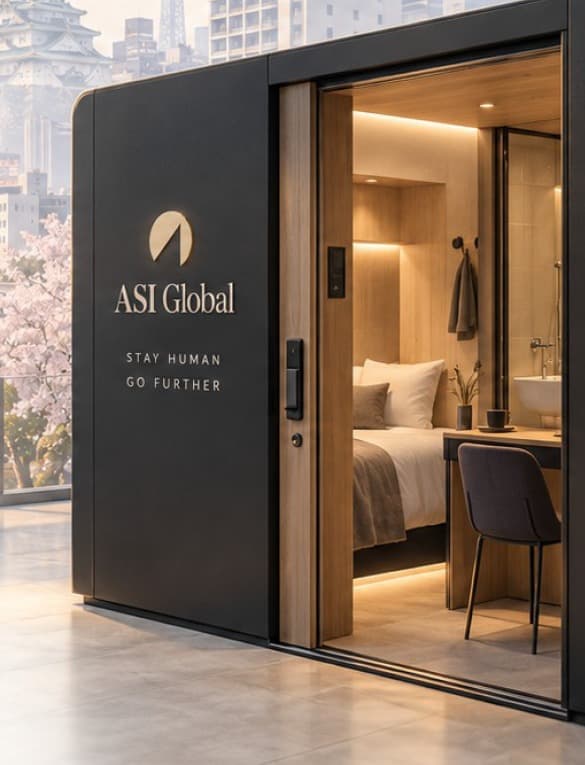
Micro Hotel
A real private room, built for the city.
Private room for two
Real privacy. Real comfort.
Autonomous operations
Bookings, access, support, cleaning, optimization.
Underused space, reactivated
Turning empty square meters into brighter city stays.
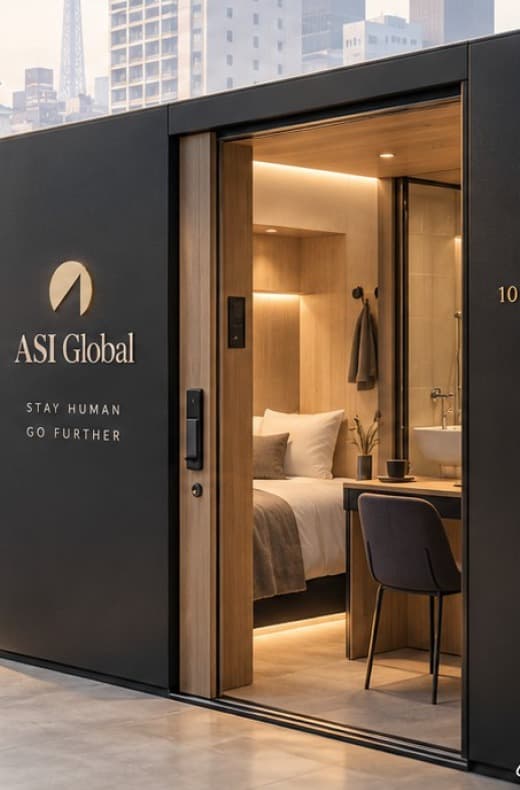
This is a compact private room, not a sleeping capsule.
Autonomous operations
Operations on autopilot. Humans on exceptions.
Most routine operations are handled by ASI. Humans step in when something unusual needs a decision.
- Booking
- Payment
- Access
- Messages
- Cleaning
- Maintenance
- Pricing
- Exception
- Human
Pilot
Start small. Prove the model.
3–5 cabins.
A limited first deployment allows ASI and its partners to validate space, guest demand, operations and economics.
International contact channel launching soon.
Japan market entry
Open Network Lab 32nd
Status
Target program
The Japan track combines ASI Micro Hotels with the ASI operating engine: compact private rooms, localized guest operations and a small 3–5 cabin pilot. This page does not imply selection, endorsement or partnership with Open Network Lab.
Media